Some travellers fall in love with the places a ship can take them. Others fall in love with the ship itself. Neither is wrong — but confusing the two is how good holidays go quietly wrong. River cruising and ocean cruising share a vocabulary of staterooms, decks and dining rooms, yet they produce profoundly different weeks. Understanding that difference, honestly and without a sales agenda, is the point of what follows.
A note on scope before we begin. This article compares the two styles Stern & Anchor advises on every week: European river cruising, and premium and luxury ocean cruising. It does not attempt to characterize every mass-market ocean product, and it makes no universal claims — not all ocean ships are mega-ships, not all luxury ocean ships are small, and not all river vessels deliver the same experience. Where the answer depends on the individual ship or itinerary, we say so.
The quick answer
If you want the shortest honest version: choose the river when the destination is the point and you want to be in it every day. Choose the ocean when the ship itself is part of the pleasure — the sea days, the dining choice, the evenings — and the ports are distinct events between time aboard. Everything below simply unpacks what those two sentences feel like across a real week.
European River Cruising
- Scale — one intimate vessel, sized for locks and bridges
- Destination — the landscape stays in view as you sail
- Sea days — few; most mornings bring a new port
- Dining — one or two venues, a shared rhythm
- Evenings — quiet conversation, tomorrow's town outside
- Cabins — a focused range of categories
- Ashore — daily, guided, eminently walkable
- Motion — sheltered inland waterways
- Ports — often a short stroll into town
- Pace — destination-intensive, gently structured
- Often suits — travellers who put the place first
Premium & Luxury Ocean Cruising
- Scale — from yacht-like vessels to grand resort ships
- Destination — distinct ports, connected by open sea
- Sea days — part of the rhythm on many itineraries
- Dining — a wider choice of venues and times
- Evenings — shows, music and nightlife if you want them
- Cabins — many categories, a deeper suite range
- Ashore — chosen days in port, occasional overnights
- Motion — open-water sailing; it varies by route
- Ports — terminals, and the occasional tender
- Pace — a blend of sea days and shore days
- Often suits — travellers who love the ship itself
No winners here — only two different rhythms. The right column for you is the one that reads like the holiday you actually want.
The ship itself
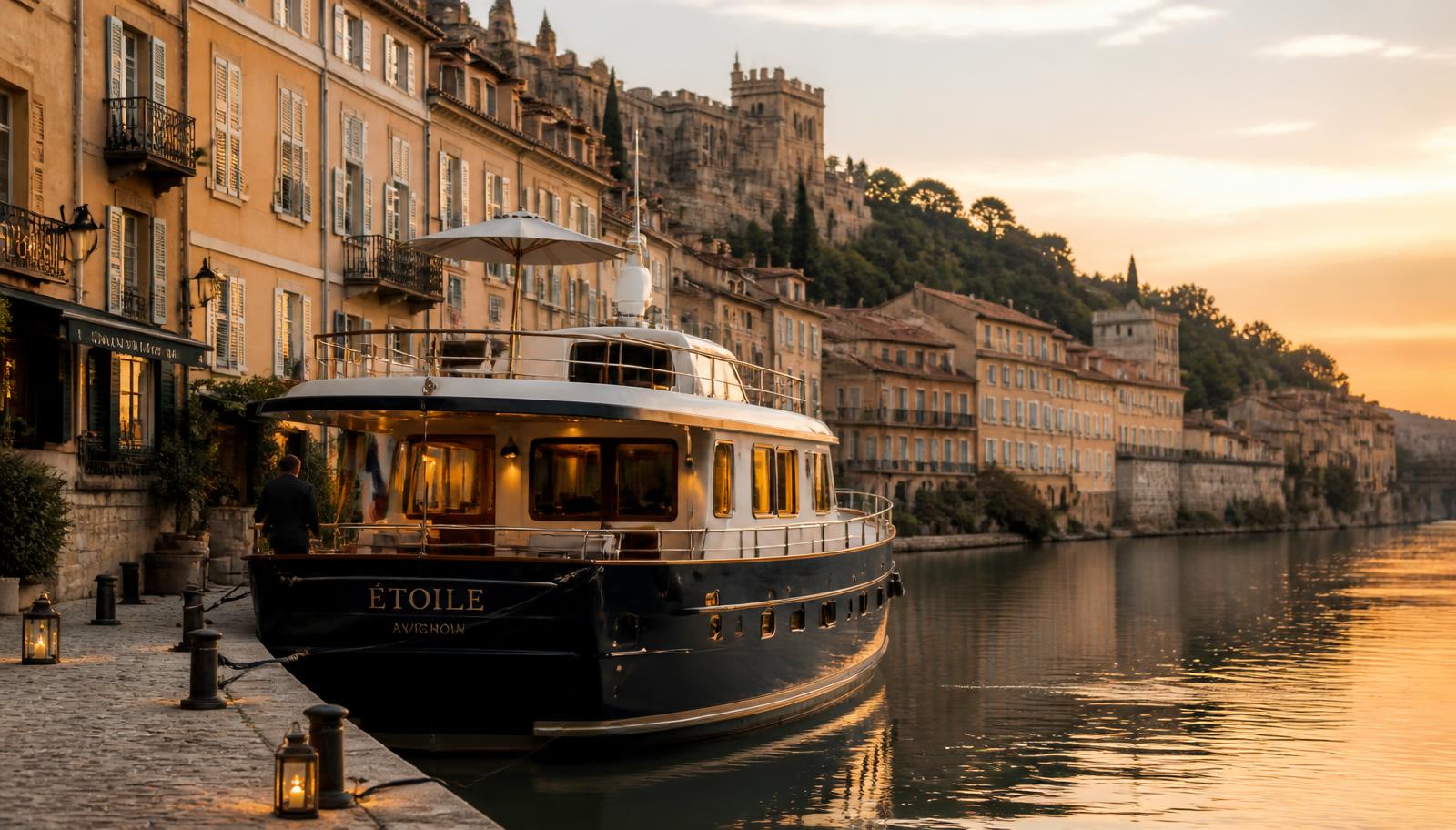
River vessels are shaped by constraints no architect can negotiate with: locks, bridges, and the width of the river itself. The result is a ship of human scale — typically a main restaurant, one lounge, a sun deck — where nothing is more than a minute's walk away and the crew learns your name without trying.
Ocean ships vary enormously, even within the premium and luxury tiers — from yacht-like vessels carrying a few hundred guests to grand ships carrying many more. Scale buys choice: more restaurants, more entertainment, more room to spread out. It also asks something of you — a longer walk to dinner, a little more navigation, a little more anonymity. Neither trade is a verdict. Intimacy and variety are both luxuries; they are simply different ones.
Where the destination fits
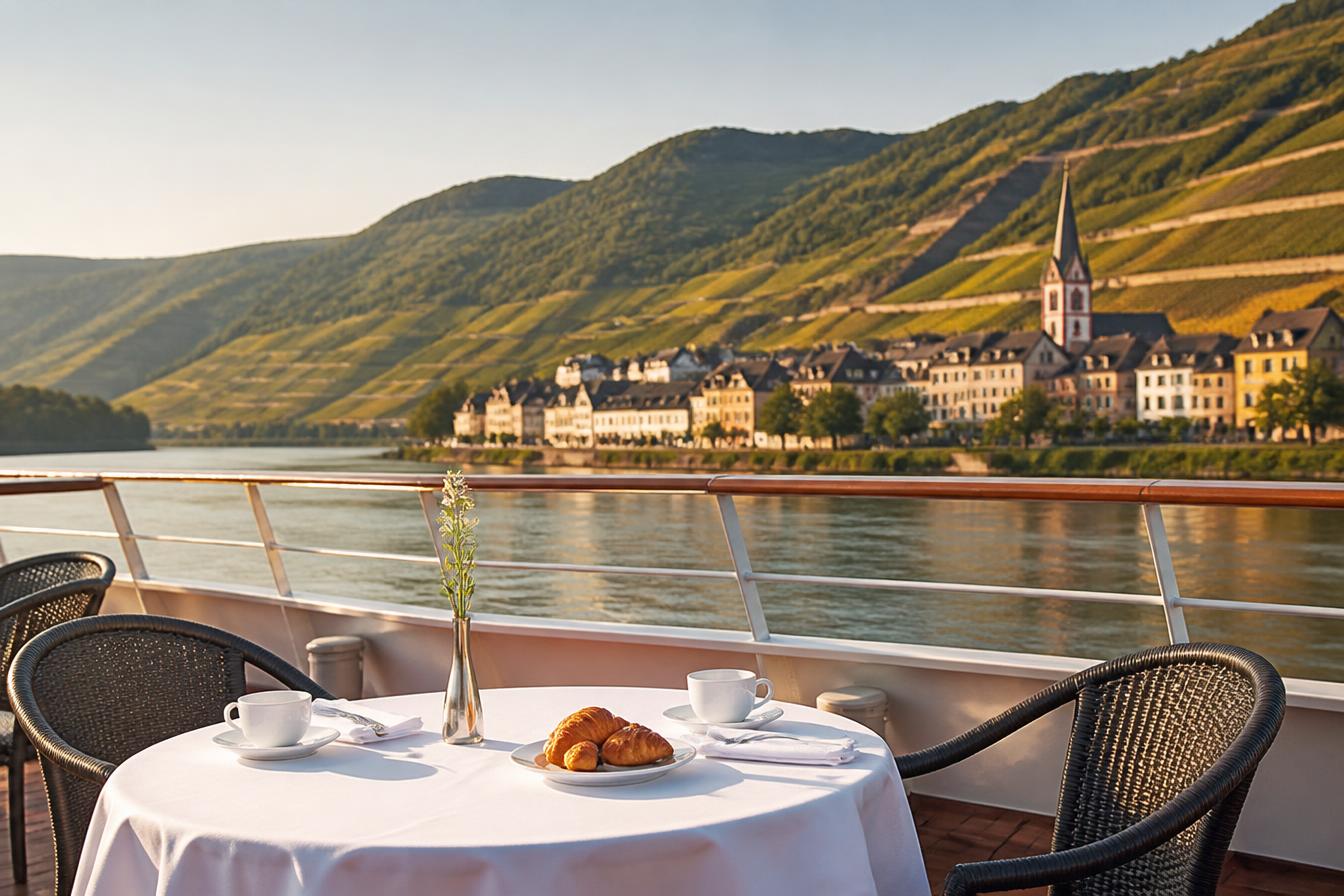
This is the deepest difference between the two styles, and the one travellers feel most. On a river, the landscape is rarely a backdrop — it is the programme. Vineyards, castles and church spires drift past at walking pace while you eat breakfast, and the town you will explore after lunch is often visible before dessert. Much of the sailing happens within sight of the shore, and many itineraries berth close to the heart of town.
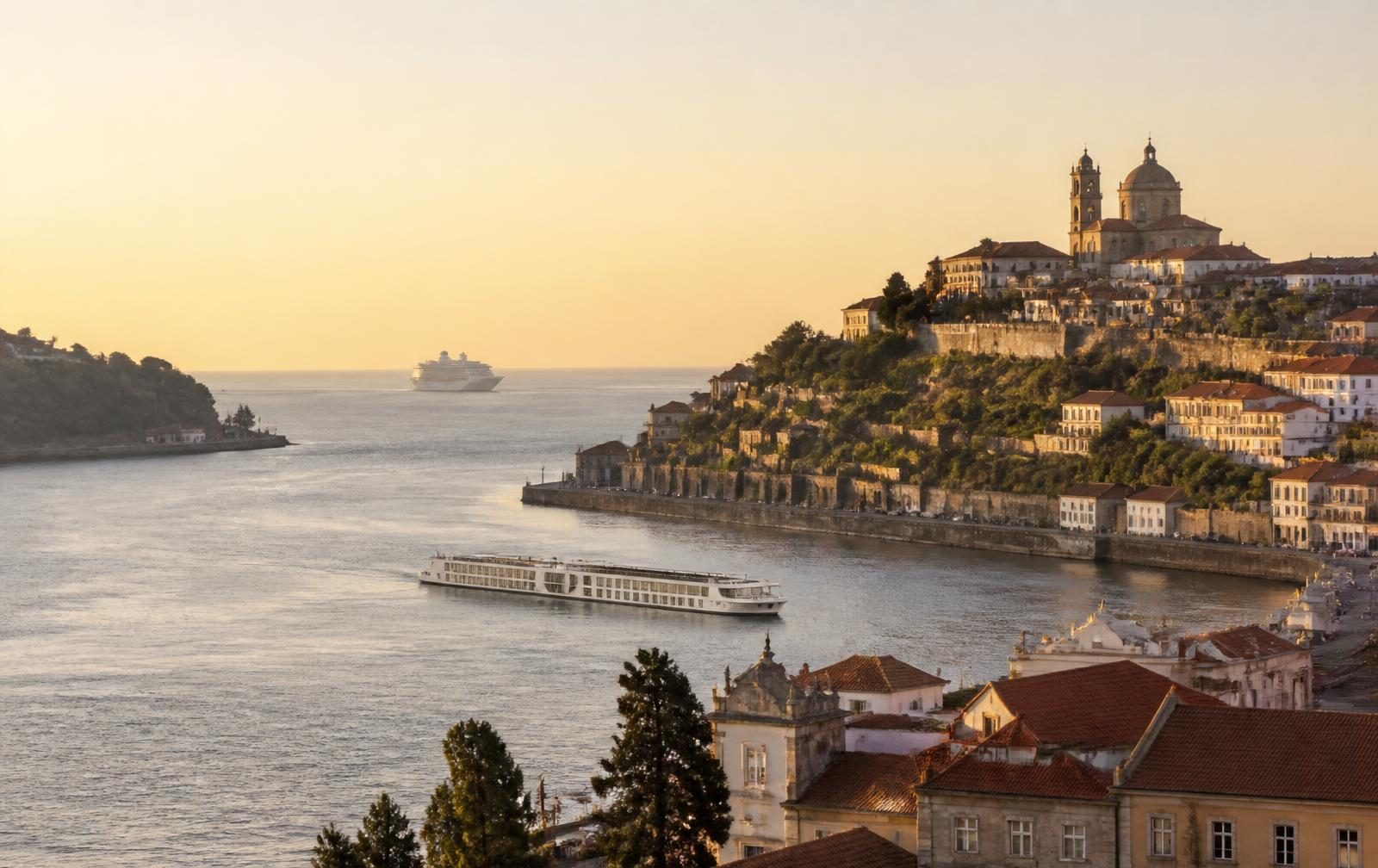
An ocean voyage works differently. The ship covers greater distances between geographically distinct ports, and the time between them belongs to the vessel itself — the sea, the deck, the long lunches. Itinerary design matters more here than any brochure suggests: a well-planned ocean route can still deliver port-intensive weeks and overnight stays, just as some river itineraries dock outside the town centre. Judge the specific itinerary, not the category.
“On a river, the destination is the journey. On the ocean, the journey is part of the destination.”
Sea days and the shape of a week
River itineraries rarely include a traditional sea day; most mornings you wake up somewhere new. Ocean itineraries, depending on the route, usually fold in days at sea — and for a great many travellers, those days are the holiday. An unhurried breakfast, a book on deck, a spa appointment, lunch nobody rushed, the simple pleasure of watching open water. If that sounds like restoration, ocean cruising offers something a river cannot.
If, on the other hand, a day without a new place to explore sounds like a day mislaid, the river's rhythm will suit you better. Neither preference needs defending. What matters is knowing which one is yours before you book — because a week built around the wrong rhythm never quite recovers.
Dining and evenings
River ships generally offer fewer venues — often a main restaurant and one alternative — with a more structured rhythm around a shared dinner hour. Evenings tend to be quiet: a digestif in the lounge, a little local entertainment, conversation that drifts toward tomorrow's port. It suits travellers who like their evenings the way river towns make them.
Premium and luxury ocean ships typically set a broader table: multiple restaurants, flexible dining times, and evenings that can run from a string quartet to a full production show to a nightcap under the stars. The variance between individual ships is wide — some luxury vessels are deliberately serene — so treat this as a tendency, not a rule.
Cabins and personal space
Avoid brochure arithmetic here: river cabins are not universally small, and ocean cabins are not universally large. River vessels work within the beam the locks allow, which concentrates choice into a focused range of well-designed categories — and note that a 'French balcony' and a step-out balcony are different things. Ocean ships, with more hull to work with, generally offer a wider ladder of categories, running up to genuinely expansive suites.
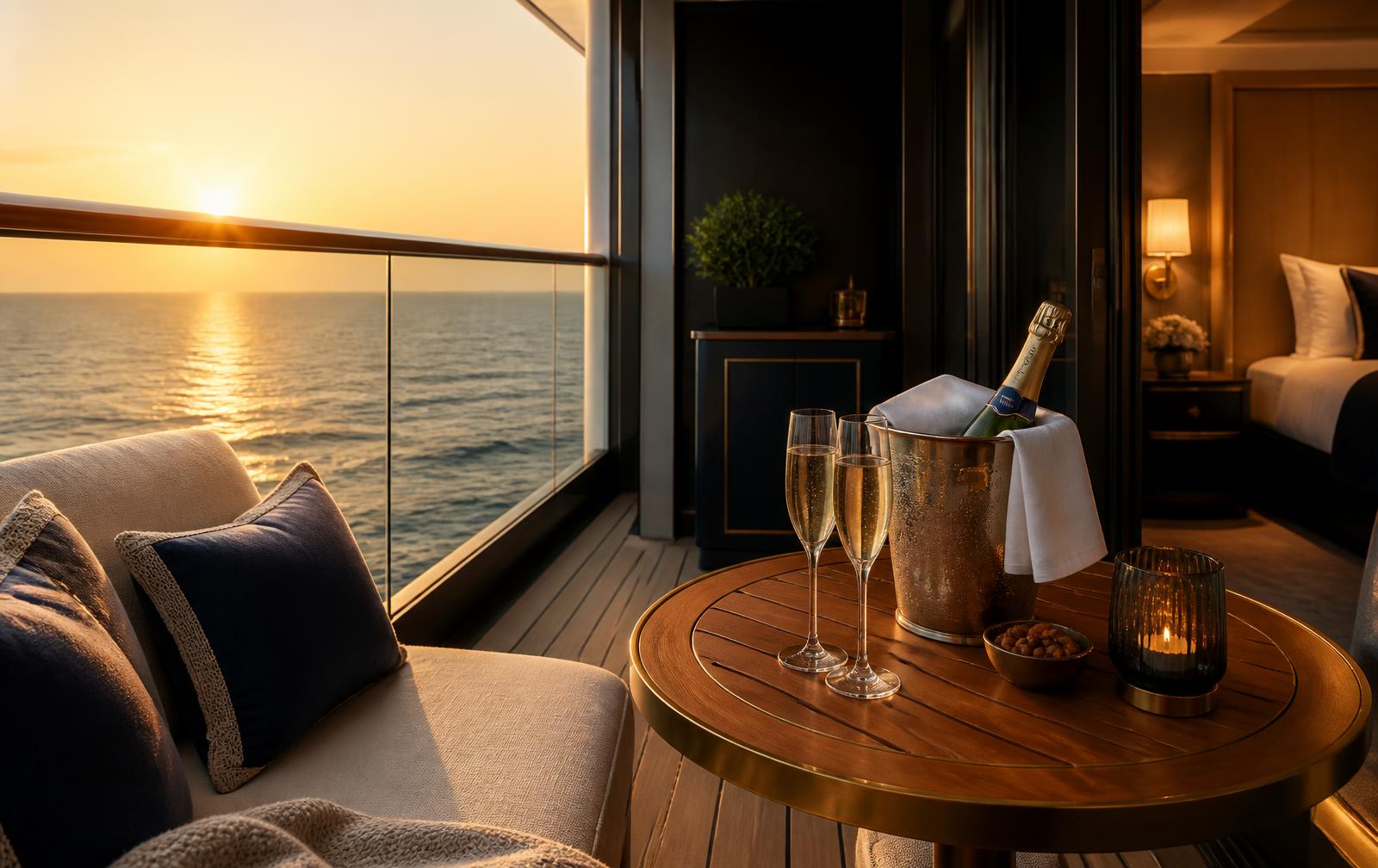
The useful question is not square footage but usage. If your cabin is somewhere you sleep and change between ports, the river's efficient comfort serves beautifully. If you picture slow mornings on your own veranda with room service, the ocean's deeper suite range — worth studying carefully, and we have a Logbook guide to exactly that — may matter more.
Excursions and time ashore
River cruising is built around the shore. Most itineraries include a guided excursion in most ports — walking tours, tastings, castle visits — and the towns themselves are usually compact enough to explore independently afterwards. The result is a gently full programme: something organised most days, with time to wander on your own.
Ocean cruising offers latitude in both directions. Some days you will take a ship's excursion; others you will explore entirely alone; some itineraries include overnight stays that let you experience a city after the day-trippers leave. What is and is not included varies by line and by fare, on rivers and oceans alike — our guide to what a river fare actually covers is the place to untangle that side of the ledger.
Motion, mobility and practicalities
River cruising takes place on sheltered inland waterways, and its motion is a different character from open-ocean sailing — most guests describe it as barely perceptible. That said, no responsible advisor promises anyone a motion-free holiday on any water. If you are sensitive to motion, say so; the answer often lies in choosing the right ship, cabin position and itinerary rather than the right category.
- Gangways and rafted ships: River vessels frequently berth side by side; reaching the shore can mean crossing a neighbouring ship's deck.
- Stairs: River ships have lifts between most, but rarely all, decks; sun decks are often stairs-only.
- Cobblestones and walking tours: River excursions commonly involve uneven historic streets and a steady walking pace.
- Terminals and tenders: Ocean ports can mean large terminals, longer walks, and occasional tender boats to shore.
- Distances aboard: A large ocean ship involves considerably more walking between cabin, dining and theatre than any river vessel.
Neither style is universally easier. If mobility is a consideration for anyone in your party, the right next step is a conversation about the exact ship and itinerary — gangway angles, lift access and excursion terrain vary vessel by vessel, and we check them before we recommend.
What a fare buys
Resist comparing headline fares. River fares often bundle a great deal — excursions, drinks with meals, sometimes more — while ocean fares can start lower and expand with the choices you add. Neither structure is more honest than the other; they are simply different ledgers. The only comparison worth making is the complete experience you want against the complete price of having it. For the river side of that arithmetic, our inclusions guide walks through it line by line.
Who tends to love each style
Stereotypes help no one here — this is not about age, and neither style is inherently crowded or calm. It is about what you prioritise. In our experience:
- River cruising: tends to delight travellers who want the destination to be the main event: frequent ports, guided cultural exploration, landscapes that stay with you while you sail, a smaller-scale atmosphere, and few if any days at sea.
- Ocean cruising: tends to delight travellers who want the ship to share the stage: days at sea, broader dining and entertainment, a wide choice of cabins and suites, resort-style amenities, and journeys that span greater distances.
The case for enjoying both
None of this is a permanent identity. 'River cruiser' and 'ocean cruiser' are not tribes, and you need not join either. We regularly plan a Danube itinerary for a traveller one year and a Mediterranean or Northern Europe ocean voyage for the same traveller the next — different holidays calling for different rhythms. That is the point of an advisor who works across both styles: the recommendation follows the trip you want, never the product on the shelf.
You may lean toward the river
- I want the destination to be the main event.
- I'd rather wake up somewhere new almost every day.
- I prefer quieter evenings.
- I like smaller-scale environments.
- I enjoy guided cultural exploration.
You may lean toward the ocean
- I love having days at sea to unwind.
- I enjoy lots of dining choices.
- I like shows and nightlife.
- I want many cabin and suite choices.
- I like having plenty to do without leaving the ship.
Read both columns slowly. One of them will feel like your ideal Tuesday on holiday — that feeling is the answer, and it deserves a conversation.
What I would ask before recommending one
Before I recommend either style, I ask questions that have nothing to do with ships. What do you want to remember most when you get home — the places, or the journey between them? How do you feel about a day with no port at all? What do you enjoy doing after dinner? How much choice do you want once you're aboard, and how independently do you like to explore? We'll talk about cabins, and about any mobility considerations worth planning around. The answers usually point one way quite clearly — and occasionally they tell me you should try both, on different trips. My job is to understand how you travel before we ever discuss a vessel.
Continue reading: European River Cruises — the honest guide · Luxury Ocean Cruises — the honest guide
A Private Consultation
Begin Your Bespoke Journey
Ready to explore the world of boutique small-ship and river cruising? Work directly with Eric to design your next voyage.