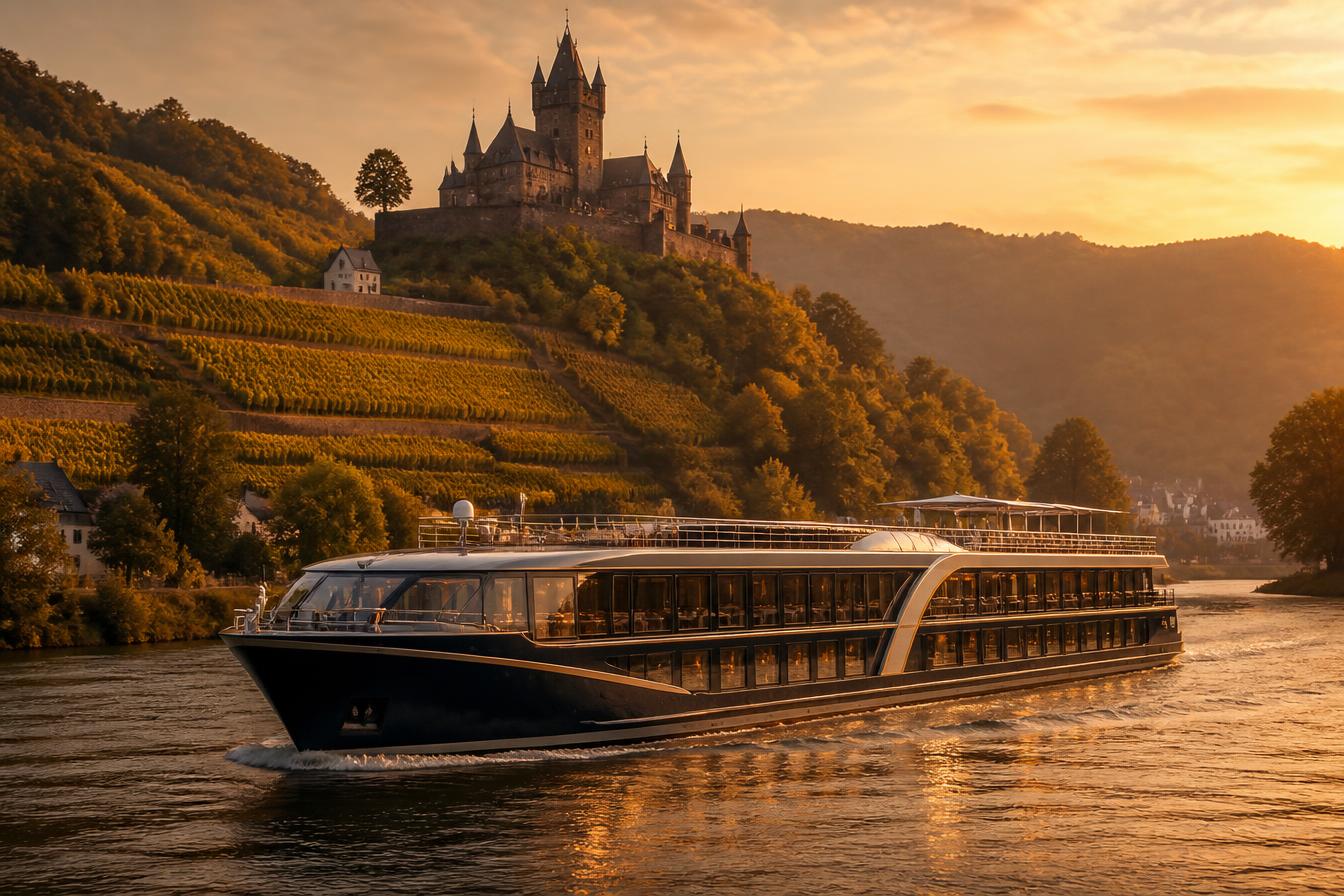
It is the first question nearly every traveller asks about a Rhine or Danube cruise, and it deserves an honest answer: there is no single best month. There is a best match — between a season and the kind of trip you actually want. The same river that feels made for you in June can feel wrong for you in November, and neither reaction says anything about the river. It says something about the fit.
So this guide walks the year as the river lives it — spring, summer, early autumn, late autumn, and the Christmas-market sailings that are really a different holiday altogether — and then turns the question around. Not 'when is best?' but 'best for whom, and for what?' By the end, you should be able to choose your dates intelligently, while knowing the one or two things nobody can honestly promise you.
The quick answer: choose by experience
If you want the long version compressed into one breath: April and May bring quieter cities and a landscape waking up. June through August bring long, golden evenings and the liveliest atmosphere — along with the crowds. September and early October bring harvest colour and softer light. Late October and November bring the quietest sailings of the year, on shorter, cooler days. And late November into December belongs to the Christmas markets, which are less a season than a different product entirely. The fuller reasoning follows — and a decision grid near the end maps each priority to the periods generally worth considering.
Spring: quieter cities and a landscape waking up
From roughly April into May, the river season shakes itself awake. The chestnuts flower along the promenades, the vineyard terraces green over, and the great cities — Cologne, Vienna, Budapest — are still moving at a local pace rather than a tourist one. Queues at the major sites are typically shorter, the café terraces are opening, and the light has a clarity photographers wait all winter for.
The trade-off is unpredictability. Spring weather on both rivers is changeable — a warm afternoon can follow a cold, wet morning, and packing layers is not a cliché but a strategy. Some riverside attractions keep shorter hours early in the season. Spring suits travellers who value space and freshness over guaranteed warmth: garden lovers, repeat visitors, and anyone who finds a half-empty cathedral more moving than a full one.
Summer: long days and lively destinations
June through August is peak season, and it earns the title honestly. Daylight stretches deep into the evening — scenic sailing after dinner, a final glass on the sun deck while the castles slide past in late golden light. Riverside café culture is at full voice, excursion programmes are at their fullest, and the towns feel celebratory.
Temperatures typically sit in the low-to-mid twenties Celsius along the Rhine valley and the mid-to-high twenties on the Danube around Vienna and Budapest — though heatwaves can push well past that, and city sightseeing on a 33-degree afternoon is work, not leisure. The crowds are real, too: peak weeks mean busier ports and fuller excursions. Summer suits travellers bound to school holidays, devotees of the long evening, and first-timers who want the river at its liveliest. Book early — peak sailings and the preferred cabin categories are the first to go.
Early autumn: harvest atmosphere and softer crowds
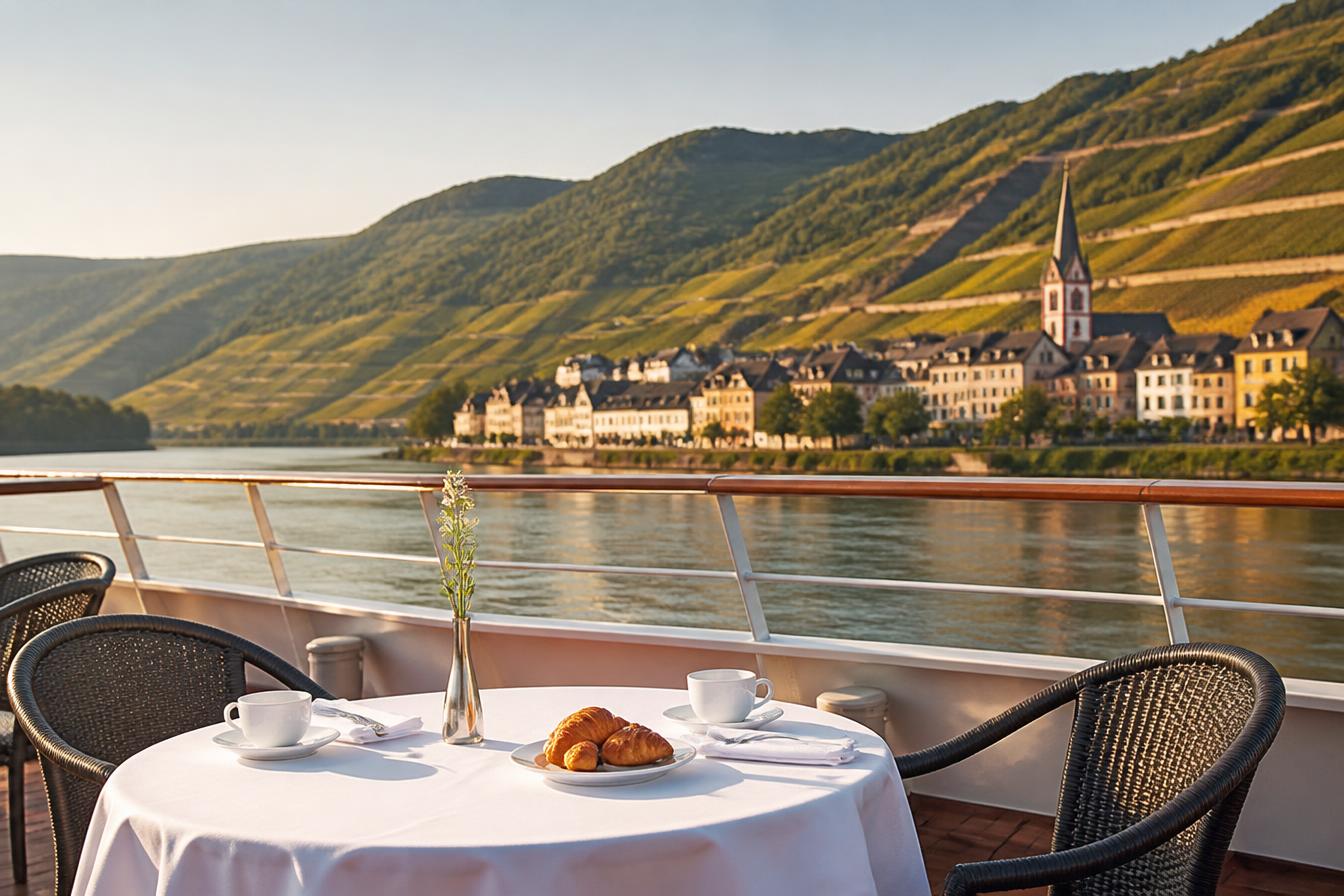
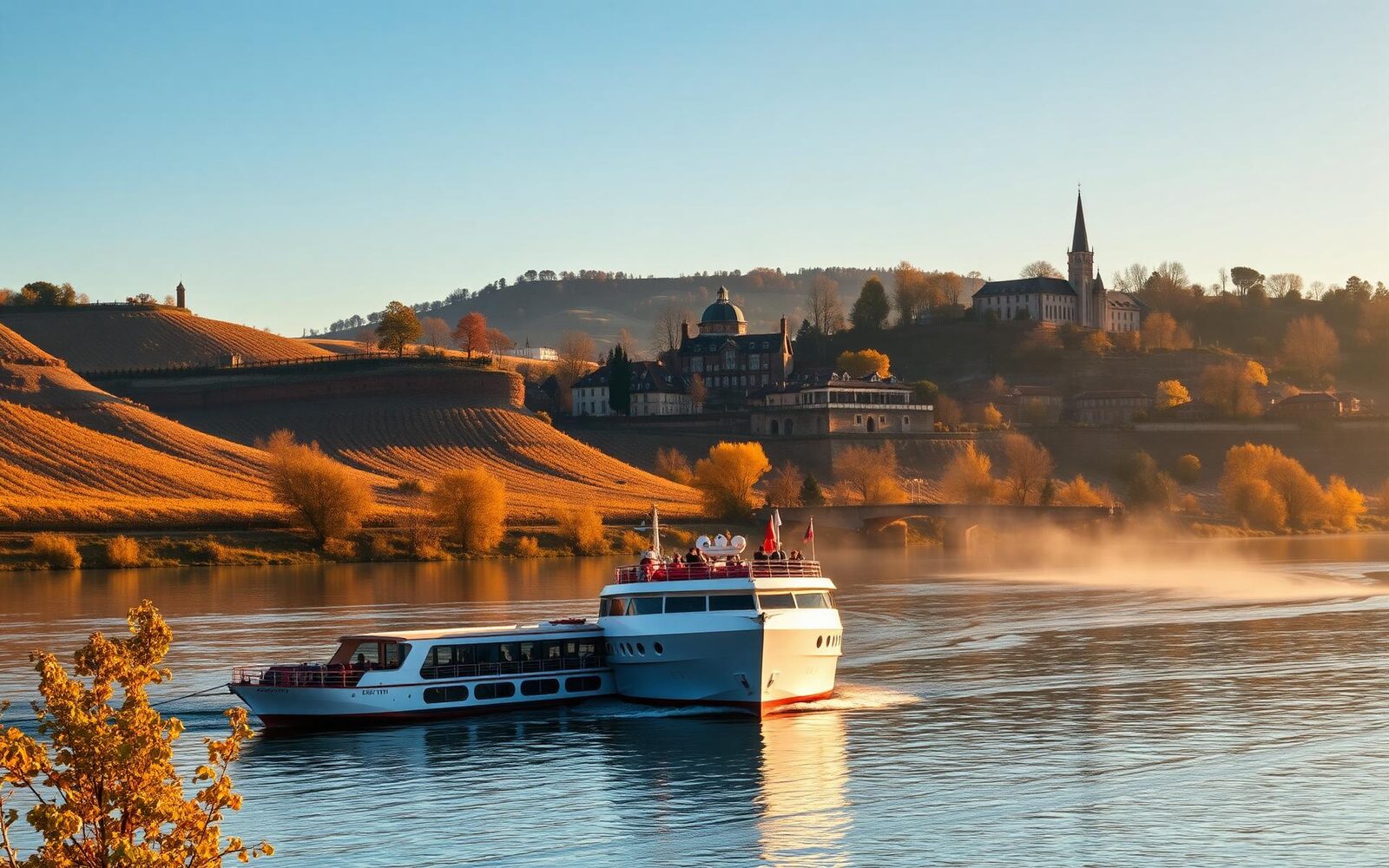
Ask river veterans for their favourite window and a quiet consensus forms around September into early October. The vineyards turn amber and rust, the harvest is underway in the Rhine's terraced hills and the Wachau's wine country, and the light goes low and honeyed — the photographer's season. Mornings can be crisp; afternoons are often mild and settled. The summer crowds thin, yet nearly everything remains open.
It is harvest season on Portugal's Douro, too — if that idea stirs something, the Logbook's piece on the Douro at harvest captures what September on a wine river feels like at its most personal. Early autumn suits photographers, the wine-curious, and couples who would trade a little warmth for a great deal of atmosphere. It is nobody's secret anymore, so the best September sailings reward early booking as well.
Late autumn: quieter travel and changing conditions
From late October into November, the river slows. These are typically the quietest sailings of the main season: misty mornings, bare vines, half-empty old towns, and a crew with time for conversation. Fares for these weeks often sit below peak — value-hunters should look here, though the comparison still belongs to the whole fare, not the headline number. The honest trade-offs: days are short, weather trends cooler and wetter, and some seasonal attractions begin to close. Late autumn suits the solitude-seeker, the flexible traveller, and anyone who prefers a city in its working clothes.
Christmas markets: a different river cruise entirely
From late November until just before Christmas, the rivers change character completely. A Christmas-market sailing is not 'winter river cruising' — it is a distinct product with its own rhythm. The days are short and cold; the scenery is town-centre lights rather than vineyard hillsides; and the itinerary orbits the markets themselves — Nuremberg, Vienna, Budapest, Cologne, Strasbourg and dozens of smaller towns, each with its own traditions of handicrafts, gingerbread and glühwein.
Most markets open in the second half of November and close around the 23rd or 24th of December, but exact dates vary by city and by year. Nuremberg's Christkindlesmarkt, for instance, is announced for 27 November to 24 December in 2026, while Vienna's markets open in waves from early to mid-November. So before booking, confirm the specific sailing's itinerary against the actual market dates for that year — a cruise departing the week before the markets open is a very different holiday from the one in the brochure photograph.
Market cruises attract a different traveller entirely: festive, often multigenerational, there for atmosphere rather than sightseeing. If that is the trip you want, no summer sailing will substitute for it. These departures are also among the first to sell out.
Does the best time differ between the Rhine and the Danube?
Broadly, no — the two rivers share the same cruise calendar, the same peak season and the same Christmas-market finale. But the accents differ. The Danube runs more continental: summers around Vienna and Budapest are typically warmer than the Rhine valley's, while spring and late autumn can feel sharper. For Christmas markets, the Danube's imperial capitals and the German-Austrian market tradition give it a particular richness — though the Rhine's markets, Cologne's cathedral backdrop among them, are hardly a consolation prize. And the scenery peaks differently: the Rhine's vineyard-and-castle gorge is at its most theatrical in early-autumn colour, while the Danube's grand cities ask less of the season and give generously year-round.
If you are still choosing between the rivers themselves, the Logbook's connoisseur's guide to the Rhine and the Danube walks through their full personalities — routes, atmosphere, and who each one suits.
What about river levels?
Every honest guide to river cruising has to answer this, and the honest answer has two parts. First: European river cruises can occasionally be affected by water levels. Too low, and ships cannot pass certain stretches; too high, and they cannot pass under the bridges. Both happen, in some years, in some places. When they do, the cruise lines adjust — itineraries are reshuffled, ships are occasionally swapped mid-voyage with luggage moved for you, a stretch may be covered by coach, docking points and excursions can change. Most sailings operate exactly as planned, but no one should book believing disruption is impossible.
Second: history is not a forecast. Late summer has historically been the more exposed period for low water on parts of the Rhine and the Danube — the droughts of 2018 and 2022 made headlines — while heavy rain and spring snowmelt can occasionally push levels high. But conditions vary year by year and week by week, and no month comes with a guarantee in either direction. Choose your season for the experience you want, buy travel insurance that covers itinerary changes, and treat anyone who promises perfect water levels months in advance with polite scepticism. Not even the river knows that far ahead.
Choose your season
Start with what matters most to you, and the calendar mostly answers itself:
- Mild temperatures: Late spring and early autumn are the usual sweet spots — accepting that shoulder-season weather is changeable by definition.
- Long daylight: June and July, when evening scenic sailing is at its best — with peak crowds as the price of admission.
- Fewer crowds: April and May, or late October into November — cooler and quieter, with some seasonal closures late in the year.
- Christmas markets: Late November through December — a different product entirely, so confirm your sailing's dates against the markets' actual opening dates.
- Vineyard scenery: September into early October, when harvest colours the hillsides — exact timing shifts with each year's growing season.
- Outdoor café atmosphere: June through September — with the caveat that mid-summer city afternoons can be hot work.
- Photography: Early autumn's low, warm light, or spring's blossom and clarity — weather is never guaranteed, so build in a flexible day or two.
- Value: Shoulder periods often price below peak summer — but compare what each fare actually includes before deciding, because the cheapest headline is not always the cheapest holiday.
- Holiday atmosphere: The December market sailings — festive, beloved, and among the first to sell out.
What I would ask before choosing your dates
When a client asks me for the best month, I answer with questions. What weather do you actually enjoy — not tolerate, enjoy? How much do long evenings matter to you? How do you feel about crowds — do they drain you, or is a lively square part of the fun? Is the Christmas-market atmosphere the reason for the trip, or a bonus? Are vineyards and scenery central, or are you there for the cities? How flexible are your dates? And which river and itinerary are you weighing — because, as we've seen, the river shifts the answer.
Bring me those answers and the choice usually makes itself. That conversation — your priorities, weighed against the calendar, the rivers and the specific sailings available — is exactly what the voyage questionnaire is for.
Continue reading: European River Cruises — the honest guide
A Private Consultation
Begin Your Bespoke Journey
Ready to explore the world of boutique small-ship and river cruising? Work directly with Eric to design your next voyage.